


NOTE: This post is 100% human written. No AI. Time Writing: 5 hrs 15 min
The essence of every human being is creativity. I don’t mean exclusively the way we typically think of creativity as being related to art; whether fine art, music, photography, literature and the like, although these are forms of creative expression. Creativity isn’t, fundamentally, defined by modes of “doing”. At its essence to be a creator is a way of being, before it has anything to do with “doing”; and it’s a way of being that every human is born as. We are born creators. It’s where our aliveness comes from. It’s what we all did naturally as children. No one had to teach you how to create, to imagine, to fantasize, to play. As children we did this automatically, instinctively, because to create is our essence; which is to say being a creator is our essential nature.
Instead, we had to unlearn how to be a creator; which most of us did, as it is the intention of the conditioning we all experienced from our family, friends, community and the wider society. We were told to stop playing, to stop day-dreaming, to stop fantasizing. We were told “that’s what children do”, and to “grow up”. We wanted to be seen, accepted and validated by the groups upon which our survival depended, so we conformed. Slowly, but surely, the essence of what it meant to be human was displaced and replaced by a construct of conditioned humanity. Instead of generating ourselves and our lives from within, we were taught to consume who we were to be and what our lives should look like from without.
For more information on how to reconnect to and activate your power as a creator in your life, extricating yourself from the conditioning to be a consumer of life, check out TMIC’s Whole Life Architecture. A new cohort is opening in September 2026!
By “consume” I don’t only mean the consumption of things; but also the consumption of ideas, space, time, energy, people, values, customs, meaning-of-life, purpose narratives, and so on. Consumption displaced creativity as our default way of being, and it is who we are being and what we are doing whenever we look outside of ourselves for the “answers”, for the “truth” of who we “should be” and what we “should do” each moment. We have built an entire society based on this consumer model of being, not because it is true for us, or because it activates our natural aliveness, but because our economy depends on it. This model was never about our thriving. It was only ever about us being cogs feeding a system benefitting a small number of people at the top.
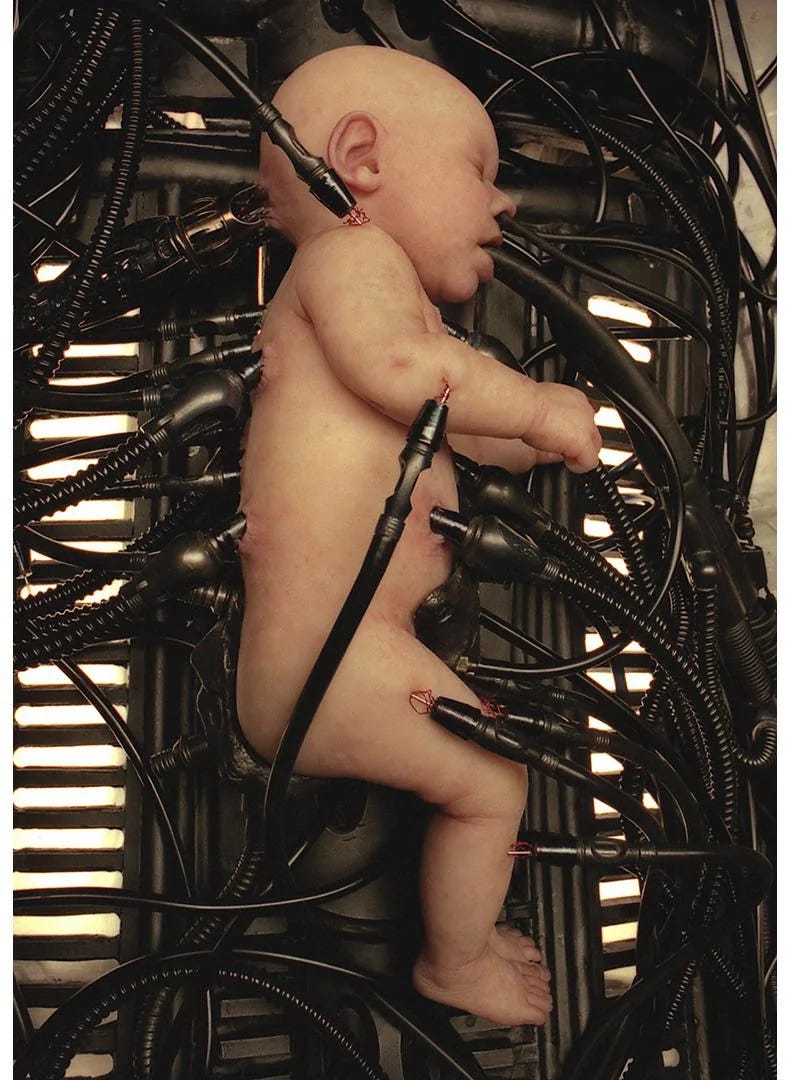
While the nascent beginnings of the capitalist consumer economy began to emerge around World War One, and the thinking deepened in the 1920’s and 30’s, since the end of the Second World War our economic model has firmly depended on converting the natural essence of human creators into mindless consumers of life in order to fuel GDP growth. Similar to that scene from The Matrix where the machines are feeding on the life-essence of humans in energy extraction pods, so too has our economic model “fed” off of the creative energy innate in all human beings, relegating everyone to cogs in “the machine”. Our economy has been feeding off of you and me our entire life! We have been trained and conditioned to believe in and support it, even though it has sucked the literal life (health, aliveness, finances, relationships) out of all of us, and the results of this experiment have been made manifest these last 15 years.
Since 1945’ish those who wield the strings of power and influence have settled on our economy being a “consumer-based economy”. As Kerryn Higgs of The MIT Press Reader puts it, “over the course of the 20th century, capitalism preserved its momentum by molding the ordinary person into a consumer with an unquenchable thirst for more stuff.” It appears the answer to the question “War, What is It Good For”, posed by The Temptations and popularized by Edwin Starr, is that war is good for developing advances in technology that control society. For as Higgs writes, “U.S. production was more than 12 times greater in 1920 than in 1860, while the population over the same period had increased by only a factor of three, suggesting just how much additional wealth was theoretically available.” The problem is this wealth was not dispersed in the service and support of human thriving as creators. Instead, the ability of military spin-off technology to produce 4-times the amount of “stuff” compared to what humans alone could produce, expedited the consumer economic age. The age of the machine had arrived. The problem was that, rather than improving life at its essence, in terms of humans using advances in technology to bring about the creative age, and leading to the aliveness and thriving Maslow referred to as “self actualization”, instead we were hypnotized, lulled to sleep with comfort and convenience, while the greatest wealth aggregation in the hands of the few was just beginning; and it was happening on the backs of “employees” - the new 20th century slave model. 80 years later, it has now reached its apex.
Welcome my son
Welcome to the machine
What did you dream?
It's all right, we told you what to dream
~ Welcome to the Machine, Pink Floyd
Since the 1950’s, at least in western culture, we began to refer to human beings as “consumers”. Today we have the “consumer price index” to measure “consumer sentiment” - are we being good little consumers of what the machine produces. Post Second World War, creator human beings were effectively lured into a Grand Bargain. Our sense of safety and security would be directly correlated to our capitulation to the mission of consumption to feed the post-war economic machine. An entirely new industry called marketing and public relations (formally called propaganda) emerged to ensure we cogs would stay in line. As the godfather of propaganda, Edward Bernays, put it in his 1928 book of the same name:
“The conscious and intelligent manipulation of the organized habits and opinions of the masses is an important element in democratic society. Those who manipulate this unseen mechanism of society constitute an invisible government which is the true ruling power of our country. ...We are governed, our minds are molded, our tastes formed, our ideas suggested, largely by men we have never heard of. This is a logical result of the way in which our democratic society is organized. Vast numbers of human beings must cooperate in this manner if they are to live together as a smoothly functioning society. ...In almost every act of our daily lives, whether in the sphere of politics or business, in our social conduct or our ethical thinking, we are dominated by the relatively small number of persons...who understand the mental processes and social patterns of the masses. It is they who pull the wires which control the public mind.” ~ Edward Bernays, Propaganda, 1928
Being Sigmund Freud’s nephew, Bernays had unique insight into human psychology, and how to use mass communications across multiple emerging mediums to leverage fear and loss to keep people small, restrained, and ignorant of the creative self expression instinct in all of us. The ultimate distraction was to foster wants and convince us through marketing and public relations that they are needs. As long as we were fearful, comfortable and desirous, we would never extricate ourselves from the capitalist consumer machine. A slave model where no one believes they are slaves is the ultimate slight of hand.
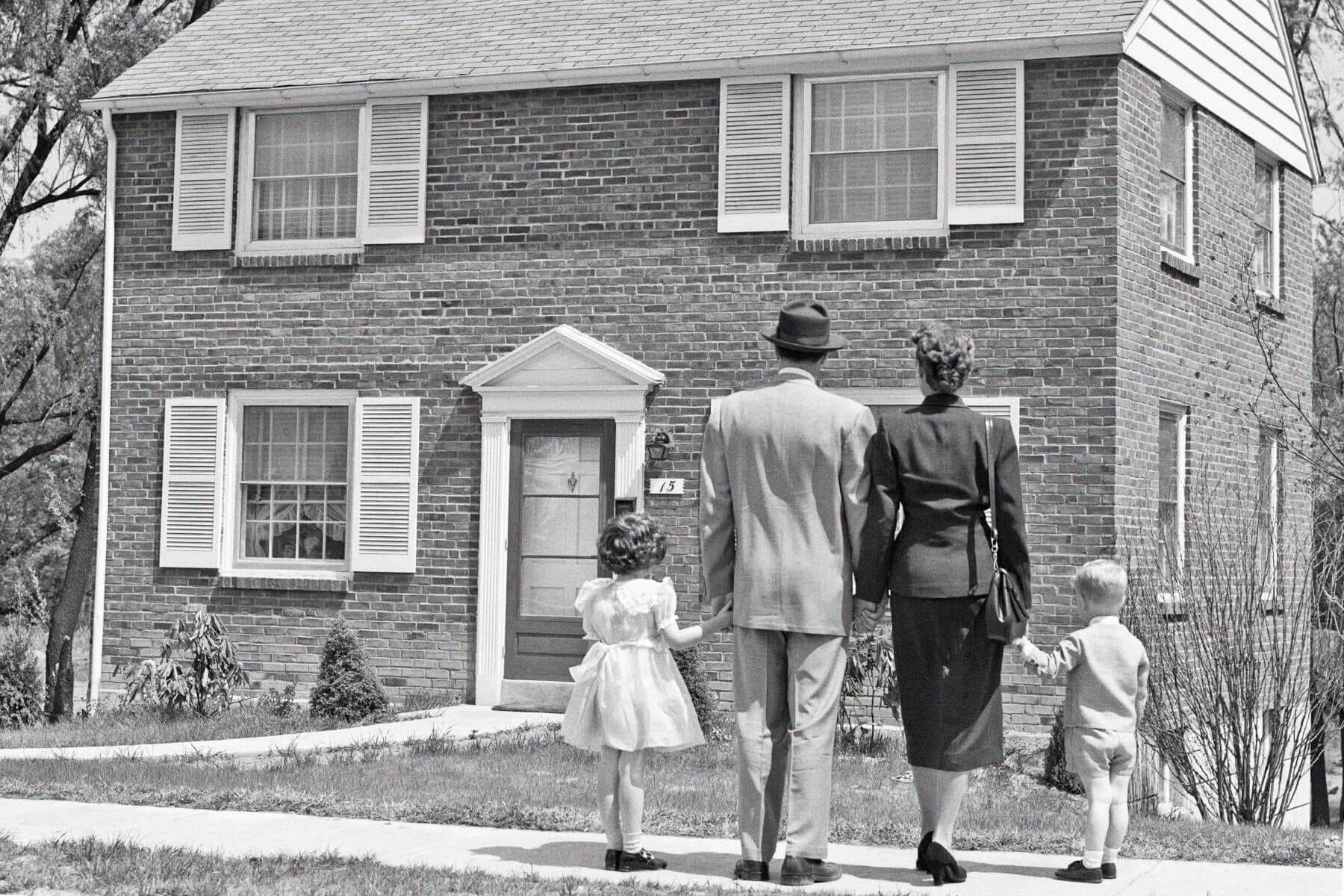
We were promised that if we worked for a company - became an employee (“The Company Man”) - then we would have access to the new system of credit, allowing us to live as though we made 10X more money than we actually did; creating leverage so that we could participate in the new mortgage system, so that we could buy a house, or the new lending system so that we could afford to buy two cars, and loads of other stuff, most of which we didn’t need, but were told by marketers, we did. We were told that “keeping up with the Jones’s” was “the good life”, and today according to PEW Research, 90% of Americans are still beholden to the machine’s Grand Bargain through the employee system. Why? Because we were all told this was what really mattered; not our crazy creative urges or visionary ideas of what was possible for us, or what the world could be like. We were taught to sacrifice those “childish” dreams, and our aliveness with it, on the alter of capitalism, nationalism and economic realism and expediency, as the only - the ultimate - way of being.
We were separated and segregated from each other, not by force, but by the indoctrination of the machine feeding our egos and our inflated sense of individual identity, versus humanity’s historical group identity that had defined us up until this transformation. We confused Jung’s idea of individuation with individualism. With all that leverage available to employees, who needed to rely on their family, friends, or community anymore. Now, for the first time, any one could be anyone; an island unto themselves, and enjoy it, so long as they conformed to the path of consumption! Everyone could have their own house, car, TV, appliances, and this was important for the economic model, because it meant exponential consumption, which meant more money in the hands of a few, whether from what was purchased or the interest owed on said purchases. Because of this, communities continued to degenerate.
The objective of individualism further mutated into valuing hyper-individualism, and this was re-framed and branded as “The American Dream”. By conforming to consumption, you could be “your own man” (women still had to exist under the control and authority of their father or husband). Any system that supported collective action was demonized as weird, evil and dangerous; hence the collapse of the first and last resistance to this model - the Counter Culture and the Sexual Revolution of the 1960’s. Decade after decade, divided we fell. Individualism, comfort, predictability, and a false sense of security was the new currency; not community, not humanity, not aliveness, which only comes from our creative essence, and our connection to each other and to the natural world; or deeper still, what Maurice Merleau-Ponty referred to as the "lifeworld" (le monde vécu). According to Merleau-Ponty, our physical body - our sensuality (also known as Eros) - is our vehicle for being in the world. Not what we own, and not what we do, but our connection to the world and to each other through or senses - through our sensual life. This embodied perspective requires our connection to nature; which is anathema for the consumer-based economy.
Mother of us all, Place of our birth
How can we stand aside, And watch the rape of the world. This the beginning of the end, This the most heinous of crimes
This the deadliest of sins, The greatest violation of all time You've seen her stripped mined, You've heard of bombs exploded underground
You know the sun shines, Hotter than ever before Some claim to have crowned her, A queen with cities of concrete and steel
But there is no glory no honor, In what results
From the rape of the world She has been clear-cut, She has been dumped on
She has been poisoned and beaten up
And we have been witness, To the rape of the world
~Tracy Chapman, Rape of the World; Album: New Beginning
By the late 1970’s and early 1980’s, nature began to be viewed through the lens of expediency and utilitarianism in the service of the hyper-individualistic consumer-based economy. We became not only disconnected from ourselves as creators, from each other as members of an organic ecosystem, a mycelium network, a living, breathing community; but also from nature, upon which our very existence depends. Instead, we were told our existence depended on feeding the machine with our consumption of all of life. Our sensual nature - our senses, our instinct, our intuition - our connection to the lifeworld became numbed out. From generation to generation, we became more dull, less alive, more ill, less vivacious. Today, officially 20% of Americans are on anti-depressants. This doesn’t include the 77% of Americans who currently report resorting to self-medicating behaviors to cope with mental health issues. What are we medicating ourselves from? I assert that it is the self-abandonment of our true nature, our true selves as creators.
"We live in a world in which a tree is worth more, financially, dead than alive, in a world in which a whale is worth more dead than alive. For so long as our economy works in that way and corporations go unregulated, they're going to continue to destroy trees, to kill whales, to mine the earth, and to continue to pull oil out of the ground, even though we know it is destroying the planet and we know that it's going to leave a worse world for future generations. This is short-term thinking based on this religion of profit at all costs, as if somehow, magically, each corporation acting in its selfish interest is going to produce the best result. This has been affecting the environment for a long time. What's frightening, and what hopefully is the last straw that will make us wake up as a civilization to how flawed this theory has been in the first place, is to see that now we're the tree, we're the whale."
~ Justin Rosenstein, American software programmer and entrepreneur formerly with Google, Facebook & Asana.
To be clear, I am not making consumption wrong, absolutely. Context is critical. Consumption has a role in the creative process, but it needs to be done with profound intentionality to avoid falling into the trap of conflating consuming as creating, versus using the process of consumption to create, with intention. Consuming as creating is what happens when we feel momentarily alive from consuming someone else’s creation. Watching a movie, reading a book, enjoying someone else’s art, even shopping and buying things is consuming someone else’s creation. There is place and time for this. There is nothing intrinsically problematic with this, as long as such consumption is done with intention; but be aware, it is fleeting.
Additionally, as part of the creative process, sometimes we need to intentionally consume others ideas as activators or stimulants in the service of our own creation. But this is not what has been happening the past 80 years en masse in the consumer-based economy. That is and has largely been a total abandonment of who we are at our core. Handing over our joy, our aliveness, our power to a faceless system that is now relegating human engagement in the economy more and more irrelevant due to AI, automation, and robotics only reinforces the need for us to reconnect to the creator within us all. No one is coming to save us from outside. The bargain we made as a society 80+ years ago has proven to be a faustian bargain, and a pyrrhic victory for humanity. It’s up to save ourselves, working together, reconnecting to the lifeworld, and to each other.
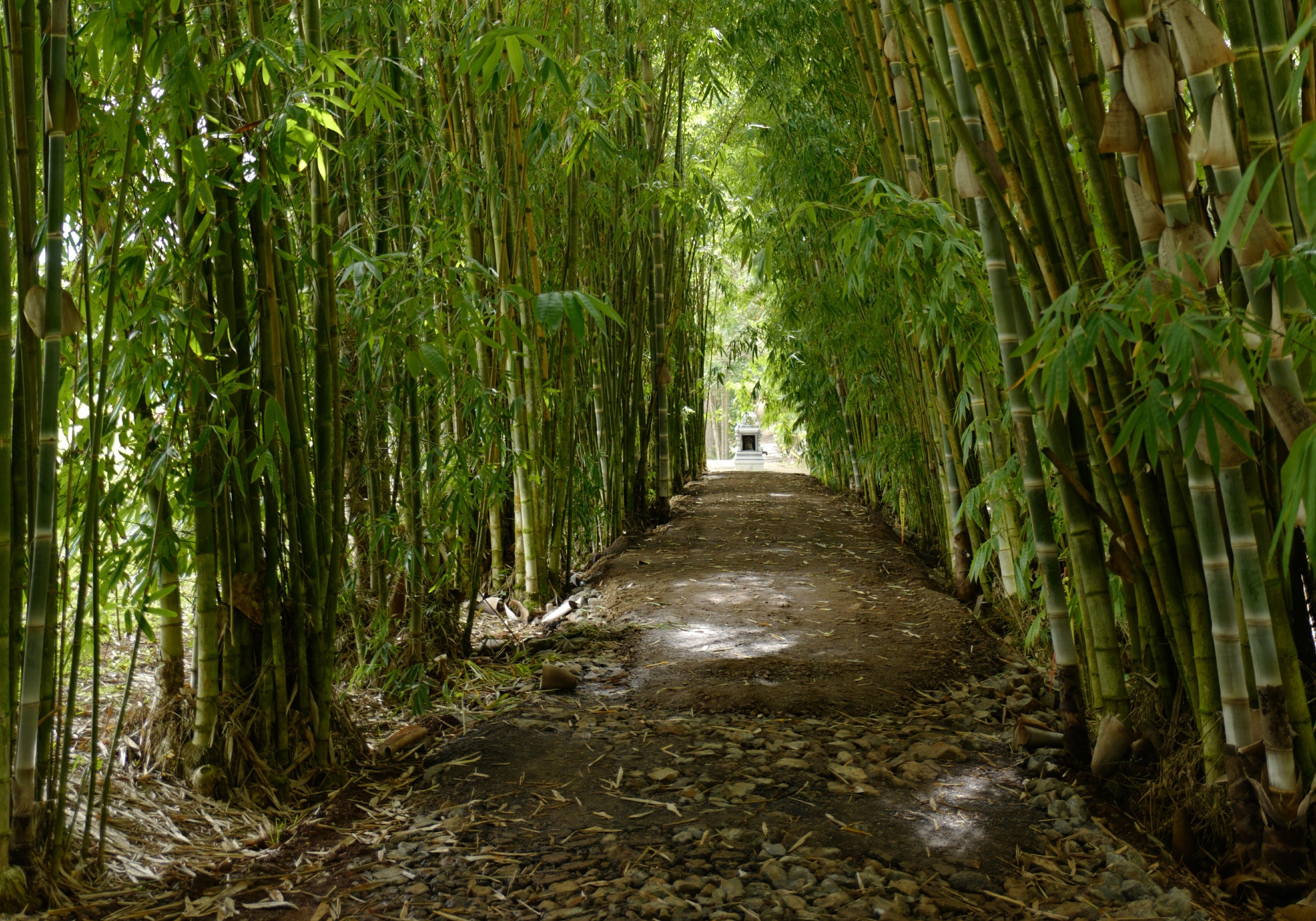
AI, robotics, and the current historical economic transformation that is beginning to unfold (the first in 80 years) is providing us with an opening to reclaim ourselves, to reconnect to each other, to reconnect to the lifeworld we have been taught to ignore and abandon. It’s not because of AI, it’s in spite of it. For I predict AI will precipitate a collapse of the consumer-based capitalistic economy, the only economy any of us have known. But know this, such an economic model is the anomaly in human history, not the norm. A creative renaissance is possible, for the first time in 80-100 years - if we take it.
Next week in Part II, I will expand on what this opportunity entails; and who, what and how we can work together to step powerfully into this new creative economy and the emerging renaissance of human thriving.